
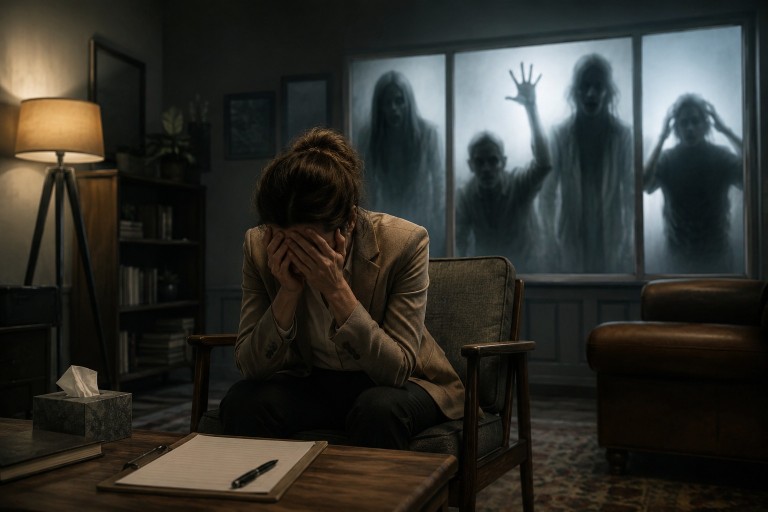
In a shift from traditional portrayals, recent horror and psychological films are depicting therapists as deeply vulnerable individuals grappling with their own emotional issues. This trend mirrors the increasing public discourse on mental health, highlighting that therapists, like everyone else, face personal challenges. The growing acceptance and discussion of therapy in mainstream culture, along with social media’s role in normalizing these conversations, have paved the way for a more nuanced depiction of mental health professionals in cinema.
Films such as “If I Had Legs I’d Kick You,” “Smile,” “Backrooms,” and “A Private Life” place therapists at the heart of unsettling narratives. These stories see them dealing with trauma, fear, and psychological breakdowns, all while they attempt to assist others. Rather than being mere supporting characters who offer guidance, these therapists are central figures whose own emotional resilience is put to the test.
As more people seek mental health support, filmmakers are increasingly presenting therapists as ordinary people rather than idealized professionals. This portrayal not only reflects the pressures faced by mental health professionals but also challenges the traditional, often infallible image of therapists. By doing so, these films acknowledge the reality that therapists, too, navigate complex emotional landscapes.
Many of these movies use supernatural or psychological horror elements to delve into internal emotional conflicts, examining themes such as anxiety, burnout, and unresolved trauma. By portraying therapists as human rather than faultless, the films emphasize the intense pressures mental health professionals endure, offering a fresh perspective on their roles and challenges.