
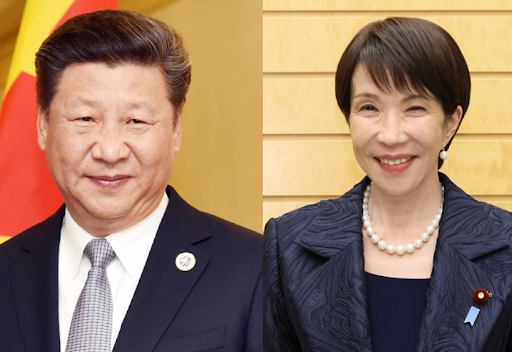
The intensifying conflict between Japan and China over Taiwan has evolved into a full-scale economic confrontation, with Beijing strategically wielding tourism as a powerful weapon. Following Japanese Prime Minister Sanae Takaichi’s statements about potential military responses to Chinese action against Taiwan, China’s embassy in Tokyo has issued its second travel warning in recent weeks. The advisory cautions Chinese nationals about alleged safety threats in Japan, representing a meticulously calculated effort to inflict substantial economic damage on Japan’s vital and vulnerable tourism industry.
Economic analysts are painting an increasingly grim picture of the potential financial impact on Japan’s economy. Takahide Kiuchi, a widely respected economist, projects losses of approximately 1.8 trillion yen ($11.5 billion) to Japan’s economic output, with possible reductions in annual growth rates by a significant 0.3 percentage points. Chinese visitors had become increasingly important and valuable to Japan’s tourism sector, with over 8 million arrivals recorded between January and October, representing nearly one-quarter of all international tourist traffic according to comprehensive official statistics from the Japan National Tourism Organization.
The consequences are already manifesting visibly and painfully in Japan’s tourism communities across the country. Rie Takeda, who owns and operates a traditional tearoom in Tokyo’s culturally rich and historically significant Asakusa neighborhood, has witnessed 200 cancellations for tea ceremony experiences booked through January. Her business typically welcomes around 3,000 Chinese visitors each year for authentic cultural experiences, and while she remains cautiously hopeful about recovery coinciding with Chinese New Year celebrations in February, historical patterns and expert analysis suggest diplomatic tourism disruptions often persist considerably longer than initially anticipated or hoped.
The bilateral tensions are creating widespread and deepening disruption beyond tourism into cultural and commercial spheres. Chinese film distributors have indefinitely postponed the release of two Japanese movies without explanation, while entertainment venues in Shanghai abruptly and unexpectedly cancelled performances by Japanese comedy troupes. Japanese manufacturers are growing increasingly concerned and vocal about potential Chinese restrictions on rare earth mineral exports, materials that are absolutely essential for automotive production and various high-technology industries. China’s punitive two-year embargo on Japanese seafood imports also remains firmly and stubbornly in effect with no signs whatsoever of resolution.
The fundamental disagreement centers squarely on competing and seemingly irreconcilable interpretations of the “One China” principle and the landmark 1972 joint statement establishing formal diplomatic relations between the two nations. Beijing demands unambiguous and explicit Japanese recognition of Chinese sovereignty over Taiwan, while Tokyo’s original carefully crafted diplomatic statement expressed that it “fully understands and respects” China’s claim that Taiwan is an “inalienable part” of Chinese territory, deliberately and strategically avoiding explicit agreement or endorsement. Takaichi has subsequently attempted diplomatic damage control, characterizing her remarks as candid and honest responses to hypothetical scenarios rather than formal policy declarations, while reaffirming her steadfast commitment to maintaining constructive, strategic, and mutually beneficial relations with Beijing.