
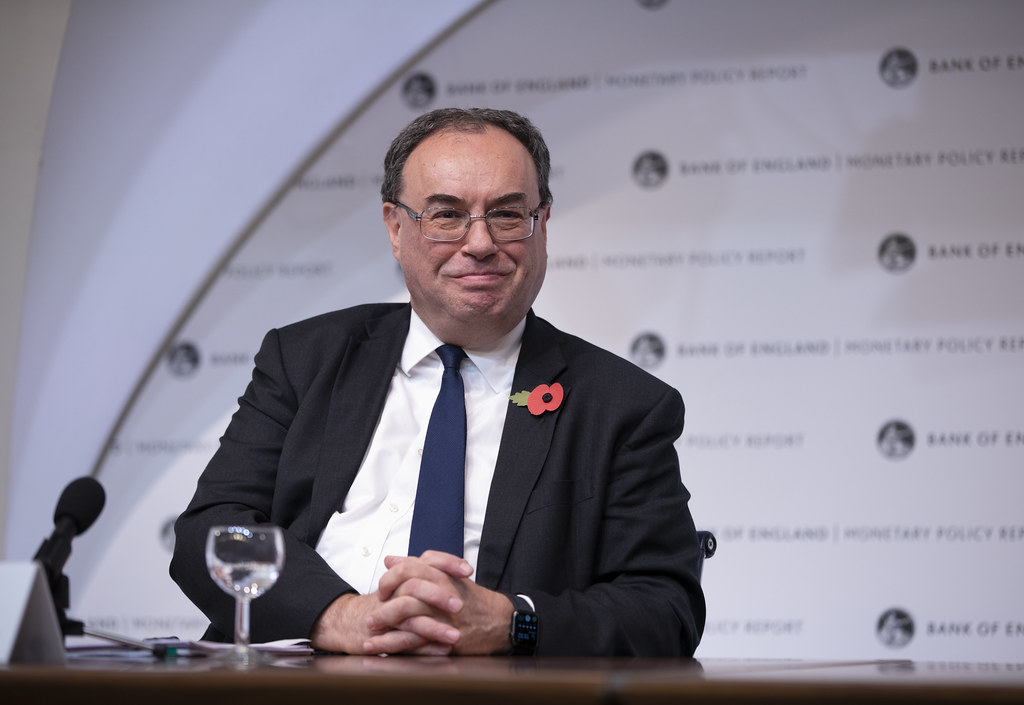
The British pound suffered its most significant decline in weeks following Governor Andrew Bailey’s indication that the Bank of England stands prepared to quicken the pace of interest rate cuts if the UK’s employment conditions worsen beyond current expectations. Market volatility erupted immediately, driving the pound down to $1.3467 against the dollar before a partial recovery helped stabilize the currency later in the trading session.
Bailey’s economic assessment revealed troubling signs of slack developing within the UK economy, with increased employer taxation highlighted as a key contributor to the current weakness. While maintaining the Bank’s commitment to careful policy implementation, the Governor’s confidence in the downward path of interest rates from their present 4.25% level has clearly influenced market sentiment, building on four previous quarter-point reductions.
The underlying economic data has painted an increasingly concerning picture, with official figures showing unexpected GDP contractions in both April and May. These statistics have amplified worries about the UK’s economic health and near-term prospects, while independent research indicating the sharpest drop in business hiring activity in nearly two years has provided additional evidence of labor market deterioration.
Financial markets have responded with notable shifts in expectations, now pricing in an 85% chance of a rate cut in August compared to the 76% probability assigned just one week prior. This adjustment reflects growing consensus among investors that the Bank of England may need to implement more substantial policy support to address the mounting economic challenges while managing inflation that remains above target levels.