
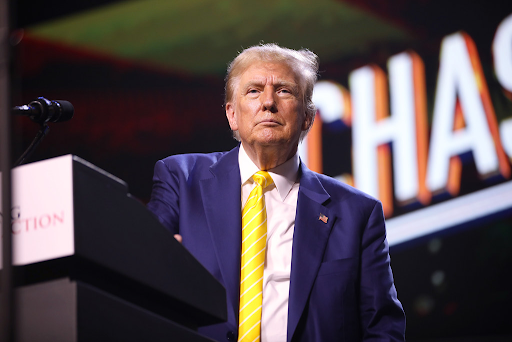
History was made Saturday — though not in the way many expected. Rather than accept a landmark Supreme Court defeat, President Trump immediately announced an even higher tariff using a different legal authority, in what analysts are calling one of the most audacious acts of executive defiance in the modern era of American governance.
Just hours after the Supreme Court ruled 6-3 that his IEEPA-based tariffs were unconstitutional without congressional authorization, Trump invoked Section 122 of the Trade Act of 1974 to impose a 15% tariff on all global imports. The provision, which has never been used before in its fifty-year existence, allows tariffs of up to 15% for 150 days before Congress must weigh in. Trump called it effective immediately and promised a legally durable permanent framework would follow.
Trump’s response to the Supreme Court ruling was historically charged. He called the decision “ridiculous, poorly written, and extraordinarily anti-American,” declared the majority justices disloyal and unpatriotic, and branded his own nominees Barrett and Gorsuch “an embarrassment to their families” — a level of presidential hostility toward the court without clear modern precedent. Dissenters Kavanaugh, Thomas, and Alito were praised as courageous voices of reason.
The world watched with a mixture of alarm, defiance, and disbelief. Germany’s Chancellor Merz described the tariff upheaval as “the biggest poison” for transatlantic economic confidence and announced a trip to Washington with a coordinated European response. France’s Macron praised the original court ruling as a victory for democratic governance. The UK, which had separately agreed to a 10% rate, finds that arrangement effectively replaced by the new 15% universal baseline.
Approximately 90% of the $130 billion collected in tariffs under the now-invalidated IEEPA framework was paid by American businesses and consumers, not foreign exporters — and the new rate promises to deepen that burden. Exemptions apply to critical minerals, metals, pharmaceuticals, and USMCA-compliant goods from Canada and Mexico. Sector-specific tariffs on steel, aluminum, lumber, and automobiles remain fully operative. The 150-day clock is now running, and the battle for the future of American trade policy has entered an entirely new and unpredictable chapter.