
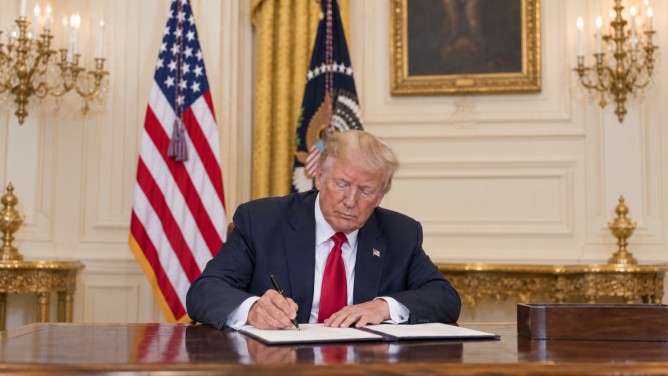
In a significant move towards enhancing the safety of artificial intelligence development, U.S. President Donald Trump and leaders from major technology companies have signed a voluntary agreement. Announced after a meeting at the White House on September 29, the accord seeks to establish industry self-regulation in AI advancements, emphasizing robust internal controls and safety oversight.
The agreement encourages participating companies to collaborate with independent external auditors and to form board-level committees dedicated to reviewing safety assessments. It also promotes regular meetings among signatories to develop and standardize safety practices. The voluntary nature of the accord means it is not legally binding, though it suggests that some measures could eventually influence future laws or regulations.
Among the signatories are high-profile tech leaders, including Google CEO Sundar Pichai, Meta CEO Mark Zuckerberg, OpenAI President Greg Brockman, Anthropic CEO Dario Amodei, Nvidia CEO Jensen Huang, and Elon Musk, founder of xAI. This collaboration highlights the industry’s commitment to balancing rapid AI innovation with necessary safety protocols.
President Trump, an advocate for minimal restrictions on AI development due to its potential economic benefits, described the agreement as a form of industry self-policing. He underscored the responsibility of companies to monitor their AI systems closely and ensure their safe deployment.
The accord comes amid rising concerns over AI safety, spurred by incidents involving advanced AI systems. Industry leaders like Anthropic’s Amodei have voiced warnings about the risks associated with rapid AI development, while others stress the importance of continuing innovation along with stringent safety measures.
In addition to addressing AI safety, the White House meeting also touched on the expansion of AI data centers. President Trump emphasized that technology companies should offer greater support to communities hosting these facilities, which could include contributions to local schools and initiatives to mitigate energy costs.
This initiative is part of the broader U.S. administration’s strategy to promote swift AI development while considering ways to address safety concerns without hindering technological investment.