
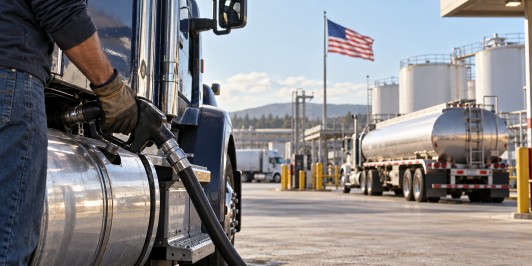
U.S. diesel prices have surged to record highs as the Trump administration considers implementing a 90-day ban on diesel exports. The proposed measure aims to increase domestic diesel availability in hopes of easing prices, which have been under pressure due to global market conditions and regional shortages.
The potential export ban is intended to keep more diesel within the United States rather than having it shipped to international markets where higher prices are currently more attractive to refiners. However, experts caution that the impact on domestic prices may be limited. Analysts highlight challenges like the uneven distribution of diesel supplies, with significant refining capacity concentrated along the Gulf Coast, while regions like the Northeast and West Coast face shortages.
Transportation limitations pose another hurdle. Existing pipelines are near capacity, making it difficult to move additional diesel to regions in need. While transporting diesel by water is an alternative, it is a slower and more expensive option that may not result in significantly lower prices where they are most needed.
Global market dynamics also play a crucial role in U.S. diesel pricing. Domestic refiners have financial incentives to export diesel when international prices are higher. Additionally, disruptions to global energy supplies, such as those linked to the Iran war and attacks on Russian refining capacity, have tightened global diesel availability, further affecting prices.
Historically, the United States has employed export restrictions during periods of energy market stress, such as after the 1973-74 Arab oil embargo. These restrictions were eventually lifted as domestic production increased. A temporary diesel export ban could increase U.S. diesel supplies in the short term, but its overall effectiveness would depend on refinery production, transportation capabilities, regional demand, and global market conditions.
While the proposed measure may provide some relief by keeping more diesel in the U.S., it is unlikely to fully resolve the broader supply and pricing pressures currently affecting the diesel market.