
To understand the Islamic Republic’s future, one must understand the Islamic Revolutionary Guard Corps — the organization created to protect the revolution, grown to dominate the state, and now positioned to determine who leads it. The IRGC is not simply a military force. It is the spine of the Iranian political system, the repository of its coercive power, and the primary vehicle through which the regime’s revolutionary ideology is maintained and enforced.
The IRGC was established by Ayatollah Khomeini in the immediate aftermath of the 1979 revolution, specifically to prevent the kind of military coup that had occurred in other countries following revolutions. Where the regular military was a legacy institution inherited from the Shah’s regime, the IRGC was created fresh to embody the revolution’s values and protect its gains.
Over four decades, the IRGC evolved far beyond its original mandate. It developed its own intelligence service, its own navy, its own air force, and its own ballistic missile program. It built an economic empire spanning construction, energy, telecommunications, and consumer goods — an empire estimated by some analysts to control more than a third of Iran’s formal economy, with additional significant influence over informal economic activity.
The political dimensions of this expansion are equally significant. IRGC veterans have been systematically placed in positions throughout the government, parliament, and state institutions. The organization’s intelligence arm monitors potential sources of dissent and manages the information environment in ways that reinforce its institutional dominance.
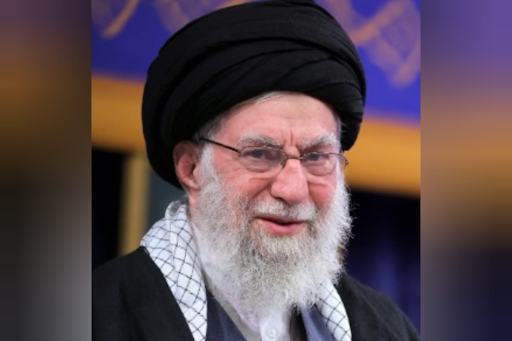
The death of Khamenei removes the one figure who theoretically stood above the IRGC in the Iranian political hierarchy. Whether any successor Supreme Leader will possess the authority and the will to check the IRGC’s power — as Khamenei occasionally did — or will instead serve as its religious legitimizer is the central question of Iran’s political future.