
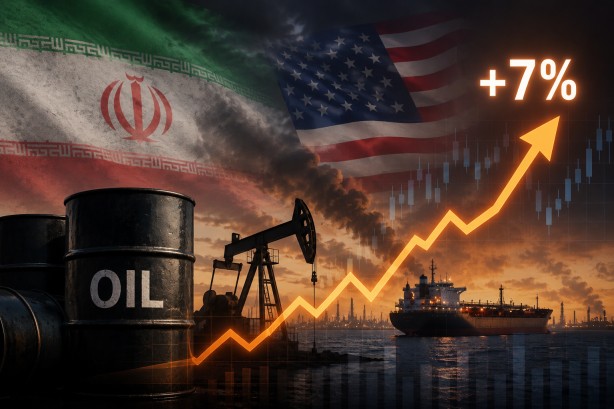
Global oil prices have spiked significantly, climbing over 7% due to escalating military tensions involving Iran, the United States, and Saudi Arabia. This development has stirred apprehension about potential interruptions in global energy supplies. Brent crude jumped nearly 8%, reaching around $90.75 per barrel, while West Texas Intermediate (WTI) saw an almost 7% rise, hitting approximately $84.76 per barrel. The price surge follows a series of military confrontations that have amplified fears of an extended regional conflict.
The Islamic Revolutionary Guard Corps (IRGC) of Iran announced it had launched ballistic missiles targeting U.S. military facilities located in Jordan, a move described as retaliation against recent American military maneuvers. In response, U.S. and Saudi forces executed coordinated strikes against Iran-backed militant sites in Iraq. These operations were aimed at logistics and weapons depots tied to ongoing drone attacks on military and energy infrastructures.
Amid this escalating conflict, concerns over maritime security have intensified. The IRGC reported that its naval forces intercepted and attacked three oil tankers in the Strait of Hormuz, alleging the vessels ignored navigation warnings. In a separate incident, Yemen’s Houthi rebels claimed responsibility for targeting a Saudi-linked oil tanker in the Red Sea, further escalating the threats to commercial shipping in these critical waterways.
The renewed hostilities have sparked fears of disruptions along the Strait of Hormuz and the Bab el-Mandeb Strait, two vital corridors for global energy transit. Market analysts caution that continuous attacks on shipping routes and energy infrastructure could sustain elevated oil prices and inject greater volatility into global markets. As tensions persist, the risk of prolonged supply chain issues looms, keeping global economies on edge.