
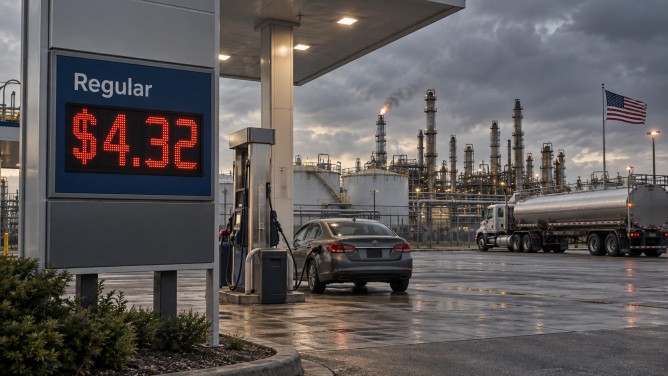
The average price of regular gasoline in the United States has surged to $4.32 per gallon, driven by mounting global oil supply concerns and geopolitical tensions. According to the latest figures from the US Energy Information Administration, this marks an increase of nearly 25 cents over the past two weeks, a significant rise from the $3.18 per gallon average recorded at the same time last year.
The primary factor behind the escalation in gasoline prices is the volatility in the global crude oil market. Recent conflicts and disruptions involving key oil-producing regions such as the Middle East, Iran, and Ukraine have heightened fears about the stability of oil supplies, pushing energy prices higher.
Diesel prices have also climbed to record levels, further straining transportation and shipping sectors, which could, in turn, escalate the costs of moving goods and contribute to broader consumer price increases. Typically, gasoline prices dip in the fall as US refineries switch from summer-grade to less expensive winter-grade fuel. However, analysts caution that ongoing geopolitical risks might prevent the usual seasonal decline this year.
Compounding the issue, the US Strategic Petroleum Reserve has been depleted, following significant withdrawals, limiting the government’s capacity to counteract potential future supply disruptions. As tensions persist in the Middle East and the Russia-Ukraine conflict continues, energy analysts predict ongoing volatility in fuel prices.
While any seasonal decrease in gasoline prices may offer temporary relief, the prevailing supply risks are likely to sustain elevated prices. This situation underscores the complex interplay between geopolitical events and global energy markets, affecting both domestic and international economic landscapes.