
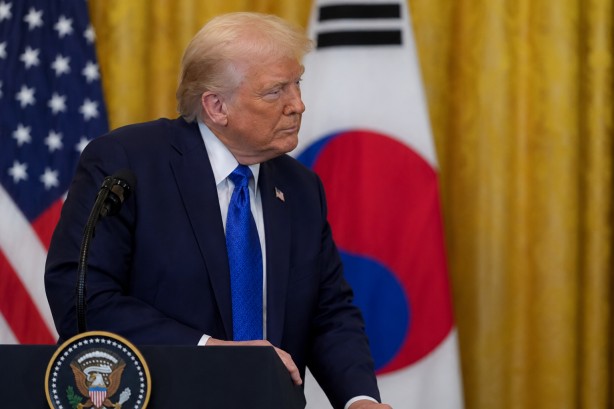
In a move that could signify a shift in US naval strategy, President Donald Trump has suggested that South Korean shipbuilders might play a pivotal role in updating and expanding the naval fleet of the United States. This prospect includes the potential purchase of vessels constructed outside the country’s borders. Addressing attendees at the Pennsylvania Defense and Innovation Summit, Trump underscored the urgency of modernizing the aging US naval fleet, pointing towards increased collaboration with South Korean firms and other international partners.
Trump’s remarks are set against the backdrop of enhanced defense collaboration between the US and South Korea. In a recent disclosure, South Korean President Lee Jae Myung mentioned that Trump had inquired about the possibility of South Korea swiftly building 10 US naval ships, a topic that was further explored during recent global meetings. This initiative comes as the US is planning to build two National Security Multi-Mission Vessels at Hanwha Philly Shipyard in Philadelphia, a project estimated at around $1.5 billion.
The Pentagon and the US Navy have also engaged with leading South Korean shipbuilders, such as HD Hyundai Heavy Industries and Hanwha Ocean, to evaluate their proficiency in crafting combat vessels. Hanwha, in particular, stands to benefit significantly from this collaboration, having acquired shipyard facilities in Philadelphia in 2024 and seeking licenses for military ship construction within the US. Concurrently, HD Hyundai and Samsung Heavy Industries are enhancing their partnerships with American enterprises to penetrate the US naval shipbuilding sector.
Despite the potential for increased cooperation, substantial legal hurdles remain. Current US regulations limit the construction of Navy vessels to domestic facilities, implying that any offshore production would necessitate legislative amendments or specific exemptions. This regulatory landscape poses a challenge to the realization of Trump’s vision of incorporating foreign-built ships into the US Navy.