
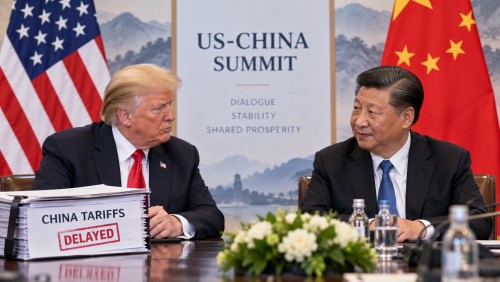
The United States is set to postpone the announcement of new tariffs on Chinese goods until after a forthcoming meeting between President Donald Trump and Chinese President Xi Jinping. This strategic delay is expected to provide the U.S. leverage in ongoing trade negotiations with China, allowing the threat of increased tariffs to be used as a bargaining chip.
The U.S. administration had been working on a trade report focused on China’s surplus industrial capacity, which was anticipated to recommend a 7.5% tariff on Chinese imports. If implemented, these duties could elevate the overall U.S. tariff rate on Chinese products to approximately 20%. This level has been noted by Beijing as aligning with the terms of the existing trade truce between the two nations.
In anticipation of the Trump-Xi summit, negotiators from both countries are expected to engage in discussions aimed at reaching potential agreements. This meeting marks President Xi’s first visit to the United States since 2023, underscoring the importance of the bilateral talks. The negotiations are part of broader efforts to address trade imbalances and economic tensions between the two leading global economies.
Earlier in the year, the Trump administration initiated investigations into over a dozen major trading partners, invoking Section 301 of the Trade Act of 1974. The focus was primarily on concerns related to excess production capacity. Any new tariffs resulting from these investigations could compound existing duties, further intensifying trade pressures on China and other affected countries.
China has cautioned that it might retaliate if U.S. tariffs exceed the levels agreed upon in the current trade truce. Chinese officials have also argued that while excess capacity is a valid concern, it should not serve as a justification for protectionist trade measures. As the Trump-Xi summit approaches, the issue of tariffs remains central to the economic dialogue between Washington and Beijing.