
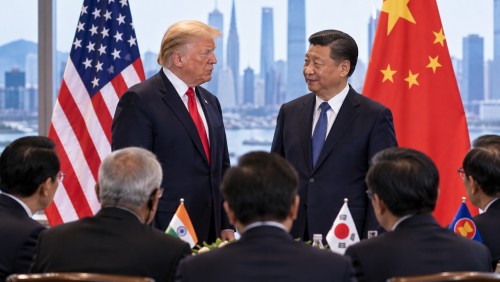
As U.S. President Donald Trump prepares for a crucial summit with Chinese President Xi Jinping, allies in Asia, particularly Taiwan and Japan, are closely observing potential shifts in Washington’s stance on Taiwan. The meeting’s agenda, primarily centered on trade and economic relations, may also touch on Taiwan, raising concerns about regional security and stability.
Taiwanese officials are particularly apprehensive, anticipating that President Xi might bring up the Taiwan issue during discussions with President Trump. While the U.S. maintains its longstanding policy of acknowledging Beijing’s position that Taiwan is part of China, it stops short of endorsing this claim, continuing to engage in informal relations and defense cooperation with the island. President Trump, however, has not made any public commitments regarding defending Taiwan in case of a Chinese attack, adding to the uncertainty.
Japan, another key U.S. ally in Asia, is urging Washington to maintain its established language and approach toward Taiwan to prevent escalating regional tensions. Japanese officials are actively seeking opportunities for Prime Minister Sanae Takaichi to communicate with Trump prior to the summit, reinforcing the importance of consistent U.S. policy on Taiwan.
A significant point of contention remains the U.S. arms sales to Taiwan, which China staunchly opposes. Trump has previously suggested that a proposed arms package for Taiwan could serve as a bargaining chip in negotiations with Beijing. This package is still pending approval, further complicating the situation.
The upcoming meeting between Trump and Xi is expected to delve deeply into U.S.-China economic relations. However, the discussions’ potential implications for Taiwan are of paramount concern to Washington’s Asian allies, given the island’s role in regional security and its critical position in global semiconductor supply chains.