
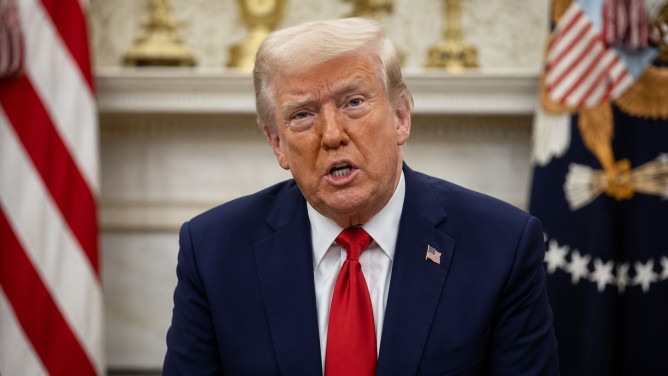
President Donald Trump has clarified that the proposed tariffs on Canadian imports by his administration are unrelated to the wildfires that have sent smoke drifting into parts of the United States. In a meeting with Lebanon’s president, Trump emphasized that the decision to impose tariffs arises from ongoing trade disputes with Canada, rather than any environmental factors. He accused Canadian officials of unfair treatment toward American farmers and reiterated criticisms of Canada’s trade practices.
Previously, Trump had suggested that Canada was to blame for its inability to control the wildfires, leading to speculation that this might have influenced the U.S. trade policy. However, he has now distanced the tariff decision from these environmental issues. The White House announced plans to implement a 50 percent tariff on most Canadian imports, arguing that Canada employs discriminatory practices against U.S. products such as automobiles, dairy goods, and alcoholic beverages.
Canadian authorities have dismissed these allegations and are calling for renewed discussions to address the trade disagreements. The proposed tariffs are slated to be enforced within 30 days unless a resolution is reached between the two countries. The situation has heightened concerns about economic uncertainty and the potential impact on the trade relationship between the United States and Canada.
As both sides navigate these contentious issues, the possibility of a compromise remains uncertain. The trade dispute underscores the complex dynamics at play between the neighboring nations, with significant implications for both economies if no agreement is reached before the tariffs take effect.