
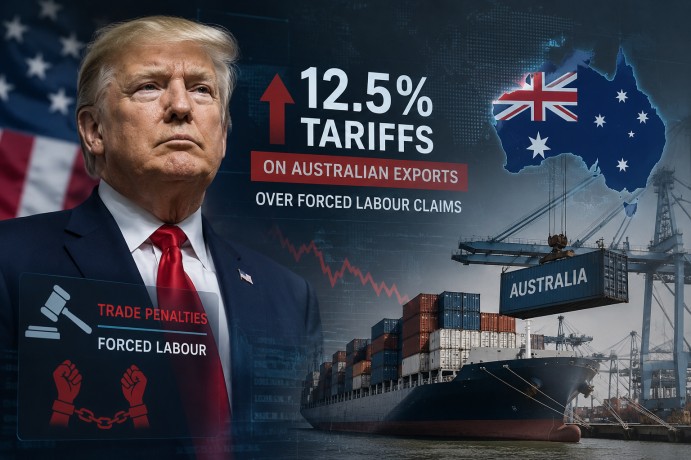
The United States has announced a new 12.5% tariff on numerous Australian exports, citing insufficient measures by Australia to prevent the entry of goods produced through forced labor into supply chains. This decision has been met with strong opposition from the Australian government, which has labeled the tariffs as unjustified and in violation of the Australia-U.S. Free Trade Agreement. Trade Minister Don Farrell emphasized that Australia upholds some of the world’s strictest laws against forced labor and modern slavery, urging the U.S. to rescind the tariffs promptly.
While the new tariffs cover a broad spectrum of Australian exports, certain key categories such as beef, gold, various agricultural products, aircraft parts, and specific mineral and industrial goods have been spared. However, Australian officials have criticized the lack of evidence supporting the U.S. action and cautioned that it could strain trade relations between the two nations.
Business groups and industry leaders in Australia have also voiced their disapproval, describing the tariffs as unjust and detrimental to exporters. They argue that the decision could have negative repercussions on the trade dynamic, impacting industries already under pressure from global trade tensions.
This development is part of a broader initiative by the Trump administration, which has been expanding trade measures affecting numerous countries over concerns related to the enforcement of forced labor laws. As the situation unfolds, both governments are likely to engage in discussions to resolve the issue and mitigate potential impacts on their longstanding trade partnership.