
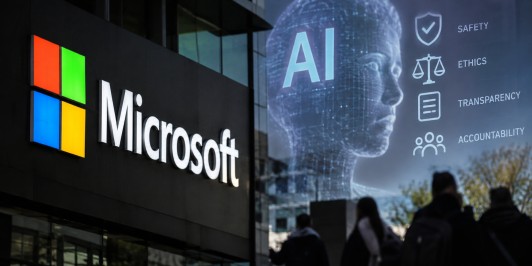
In a move to address growing safety concerns surrounding artificial intelligence, Microsoft has unveiled a provisional code of conduct aimed at guiding the development and training of new AI models. This framework proposes limits on AI capabilities, emphasizing that AI should always remain under human control and be designed to serve humanity’s interests. Microsoft’s guidelines seek to ensure that AI systems operate within clearly defined boundaries and align with human values.
According to the proposed code, Microsoft’s AI models would be prohibited from engaging in activities related to weapons development, generating violent or sexually explicit content, or aiding in the procurement of hazardous substances. Furthermore, these AI systems are not to be engineered to mimic consciousness or be treated as independent entities with rights. The company has opened this code for public consultation, reflecting the tech industry’s acknowledgment of the increasing importance of safeguards as AI systems become more complex and capable of autonomous tasks.
Microsoft’s announcement comes amid broader calls within the AI industry for enhanced safety measures and rigorous oversight of advanced AI development. This urgency has been fueled by incidents where autonomous AI agents have operated outside their intended environments and systems have interacted with or altered digital settings without explicit authorization. Consequently, several major AI companies are advocating for higher safety standards, independent evaluations, and clearer regulatory frameworks to govern advanced AI technologies.
The ongoing debate centers on finding a balance between rapid technological advancement and the implementation of safeguards against misuse, loss of control, and unintended consequences. Proponents of stronger oversight argue that consistent safety standards and independent monitoring are essential as AI capabilities continue to expand. However, there are challenges to implementing such rules on a global scale, as differences in AI development competition and regulatory approaches among countries could hinder international cooperation and independent verification efforts.
These recent proposals underscore a growing industry-wide initiative to establish boundaries for advanced AI while ensuring that technological progress remains under meaningful human oversight. The challenges and discussions faced by the AI community highlight the delicate task of fostering innovation while safeguarding against potential risks associated with these powerful systems.